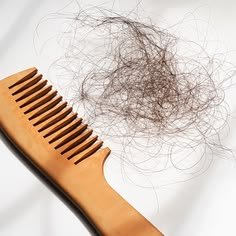

Your hairbrush appears fuller. The drain of your shower collects more strands. Hair loss during autumn may feel alarming; however, it is not typically a cause for concern. This article provides five reasons your hair falls out more in autumn, which shampoos may help, and how biotin can help you stop hair loss, including when it is less beneficial. It also explains how to tell whether hair loss needs to be treated or if it’s normal.
Top 5 Reasons Hair Fall Rises in the Fall Season
The level of sunshine decreases. Less sun exposure decreases the amount of Vitamin D in one’s body. Insufficient levels of Vitamin D can cause
- Summer causes hairs to go into the resting phase: all hairs eventually go into this resting phase before losing them. In the summer, people have more hairs in this resting phase. Thus, shedding starts a few months later in autumn (around November).
- There is a yearly rhythm affecting hair: research supports this idea. One study in 2014 on 41 participants found that the highest percentage of hairs in the resting phase was observed in September and it was the lowest in January. Another study conducted in Switzerland with 823 women points to the fact that this peak happens in July.
- The level of sunshine decreases. Less sun exposure decreases the amount of Vitamin D in one’s body. Insufficient levels of Vitamin D can cause a With the decrease of daylight, there would be lesser sunlight which leads to lower Vitamin D levels. Low levels of vitamin D may contribute to a certain form of hair shedding known as telogen effluvium. Therefore, the connection between the two is simply a correlation, not proof of causation.
- Summer damage can manifest after the hot months. The combination of sun, chlorine, salty water, and high-temperature tools can all lead to damaged hair. Damaged hair may look like shed hair, but the difference is in the roots. Furthermore, while shed hair bears a tiny, white bulb, broken hair does not.
- The arrival of cold weather with low humidity affects the scalp as well. Low temperatures and indoor heating cause dry skin, including dry scalp. Inflammatory and flaky scalp conditions may lead to increased shedding of hair.
Fortunately, in the Northern Hemisphere, hair shedding is expected to reduce significantly after October and go down during winter months.
Shampoos for Hair Fall: What Helps and What Is Hype
Let’s start with the cold, hard truth: no shampoo can actually manage hair loss. According to dermatologist Melissa Piliang from the Cleveland Clinic, shampooing can either help or worsen your hair condition, but it won’t treat hair loss. Certainly, a shampoo takes a toll on your scalp for no longer than a couple of minutes; many of them simply ensure the good health of your scalp, not hair regrowth.
Things you need to consider while picking a shampoo include:
Ketoconazole. It is the best-supported ingredient in connection with dandruff treatment and scalp inflammatory process resolution. Nizoral A-D shampoo (1% form) is available over the counter in the US. Just use it two to three times a week on your scalp to make it work.
Caffeine. There is lots of lab research to support its use in treating hair loss; however, studies related to rinse-off shampoos fall short of expectations. A famous example of caffeine-containing shampoo is Plantur 39 Phyto-Caffeine shampoo; however, you shouldn’t treat it as a cure.
Moisture retention and a sulfate-free formula. Strong and aggressive shampoos take heavy toll on hair damage and affect the scalp’s condition.
Biotin and Hair Fall: When You Need It and When You Don’t
Biotin is the most popular hair supplement. It is also the most misunderstood.
When biotin is NOT necessary (most people)
- You maintain a nutritious diet. Generally, people get biotin through food ad from gut bacteria.
- Your hair loss occurs during a certain period of the year. Biotin cannot prevent your fall hair loss.
- You have received significant hair loss. Biotin has not been proven to help prevent this hair loss.
Scientists have not found solid proof of biotin efficacy for non-deficient patients. Most supplements contain 300 to 5,000 micrograms of biotin when the person needs only 30 micrograms per day.
When biotin becomes necessary
Biotin helps when you have a real deficiency. That is rare. Risk factors include: Biotin helps when you have a real deficiency. That is rare. Risk factors include:
- Consuming raw egg whites often for a long time (raw egg whites prevent biotin absorption)
- The prolonged use of seizure medication such as carbamazepine or phenytoin
- An uncommon genetic disorder referred to as biotinidase deficiency
- Malnutrition, alcohol abuse, or digestive diseases that inhibit absorption
- Pregnant or nursing people (prenatal vitamins almost always solve the problem)
Symptoms of deficiency include thinning hair, fragile nails, and a red, scaly rash near the mouth, eyes, and nose area. There is no good blood test for biotin deficiency, so physicians use clinical symptoms and history instead.
The warning most people miss
Biotin supplements can skew many blood tests. They can cause falsely high or falsely low results. The FDA warned about this in 2017. A hair fall workup often includes thyroid and iron tests, so this matters. Tell your doctor you take biotin. Ask when to stop before a blood draw.
Normal Hair Fall vs Hair Fall That Needs Treatment
| Normal hair fall | Hair fall that needs treatment | |
| Amount | Roughly 50 to 100 hairs a day | Much more, for weeks |
| Spread | Even across the scalp | Widening parting or thin crown |
| Patches | None | Round bald spots |
| Duration | Settles within weeks to a couple of months | Lasts beyond three months |
| Scalp | Comfortable | Burning, pain, or heavy flaking |
| Trigger | Hair fall/regrowth cycle | Illness, childbirth, new medicine, crash diet, thyroid or iron problems |
| Family history | Not relevant | Hair loss runs in your family |
- The count of hair strands is different for each source; instead of counting the strands, just observe the pattern. If your parting is developing and there are bald spots or excessive shedding going on in a matter of months, it is really time for some medical help. Medical issues that require help include hereditary baldness, alopecia areata, thyroid issues, and lack of iron in the body. Head to a dermatologist specializing in baldness. They might conduct a ferritin, vitamin D, and thyroid function test.
5 Fixes That Actually Work
- Gently cleanse. Use warm water paired with moisture-rich shampoo. The experience of washing would not necessarily contribute to hair loss. Rather, the washing will aid in removing hair that has already fallen out.
- Soothe the scalp. Use ketoconazole shampoo 2-3 times weekly.
- Reduce hair breakage. Avoid overly tight styles and always remember to apply heat protectant before styling.
- Test before you treat. Ferritin, vitamin D, and thyroid tests should be done before taking supplements. Iron, zinc, or biotin supplements are only advisable after the results of the test(s) or a doctor’s advice.
- Treat pattern baldness early. For women, minoxidil is the best part of the line of FDA-approved products.
FAQ
Is it true that we tend to lose more hair in autumn? Yes, hair loss is increased during the transition from summer to autumn.
How long might hair loss in autumn last? For most people, it goes back to normal in a few weeks to months.
Is it advisable to take biotin supplements for autumn hair loss? In general, no. This is only effective in cases of a real deficiency in biotin.
Autumn hair loss is something everybody is dealing with, but it is not serious, as it has always happened. A gentle hair care regimen should be followed. Try ketoconazole if your scalp has flakes, but you should not take biotin unless you know for sure that you need it.